
Holiday Routine Disruptions and Pet Stress: What Smart Pet Devices Can — and Cannot — Do
Date: 2025-12-24 Categories: Trends Hits: 739
Holiday Routine Disruptions and Pet Stress: What Smart Pet Devices Can — and Cannot — Do
1. Introduction

The holiday season brings warmth, gatherings, and a welcome break from routine — but for pets, especially cats, these sudden changes can introduce a very different experience.
Behavioral data and veterinary observations consistently show that periods of disrupted routines — irregular feeding times, increased noise, unfamiliar visitors, and delayed maintenance of daily care — are closely associated with elevated stress responses in pets. During major holidays, these disruptions tend to occur simultaneously and repeatedly.
In recent years, smart pet devices have been increasingly positioned as solutions for “holiday stress.” Automatic feeders, smart fountains, and self-cleaning litter boxes are often promoted as tools that can maintain stability when human schedules become unpredictable.
However, the reality is more nuanced. Smart pet devices do not reduce stress by being “smart,” nor do they address anxiety in the psychological sense. Their value lies in something far more specific — and far more limited.
This article examines what actually causes holiday-related stress in pets, how routine disruption plays a central role, and where smart pet devices can — and cannot — meaningfully help. The goal is not to promote technology, but to clarify its real function within responsible pet care during the holiday season.
2. Why Routine Disruption Is a Primary Stress Trigger for Pets

For pets—especially cats—routine is not a preference, but a biological and behavioral framework. Daily activities such as feeding, drinking, elimination, and rest are governed by predictable patterns that provide a sense of environmental control. When these patterns remain consistent, pets are able to regulate stress responses efficiently. When they are disrupted, stress thresholds are reached far more quickly.
2.1 Routine as a Stability Mechanism
From a behavioral standpoint, routine serves three essential functions:
Predictability – Knowing when food, water, and litter access will be available reduces vigilance and anxiety.
Territorial security – Repeated interactions with the same spaces in the same order reinforce environmental familiarity.
Physiological regulation – Feeding times, hydration, and elimination are closely linked to circadian rhythms.
Cats, in particular, are highly sensitive to temporal consistency. Even minor shifts in feeding or cleaning schedules can lead to measurable behavioral changes, especially when multiple disruptions occur simultaneously.
2.2 How Holidays Disrupt Routine at Multiple Levels
Holiday periods introduce not one, but several overlapping disruptions. Individually, these changes may appear insignificant. Combined, they create an unstable care environment.
Common holiday-related disruptions include:
Irregular feeding times – Meals are delayed, skipped, or advanced due to gatherings, travel, or altered sleep schedules.
Reduced monitoring of water intake – Owners are often present but distracted, leading to empty bowls, unclean fountains, or unnoticed drops in consumption.
Delayed litter box maintenance – Cleaning is postponed, usage frequency increases, and odor levels rise—particularly in multi-cat households.
Environmental noise and unfamiliar presence – Visitors, decorations, and changes in household traffic alter spatial dynamics and perceived safety.
Crucially, these disruptions tend to occur simultaneously during holidays, compounding their impact rather than acting independently.
2.3 Stress Is Triggered by Loss of Control, Not Celebration
It is important to clarify that pets are not stressed by holidays as events. They are stressed by the loss of environmental control that accompanies them.
Behavioral observations consistently show that stress responses increase when pets are unable to predict or influence access to essential resources. This may manifest as:
Changes in eating behavior
Reduced or excessive elimination
Increased hiding or vigilance
Avoidance of previously accepted spaces
These responses are not signs of misbehavior. They are adaptive reactions to uncertainty.
2.4 Why Routine Disruption Matters More Than Duration
One of the most overlooked aspects of holiday stress is that short-term disruption can have outsized effects. Even a few days of inconsistent care patterns can elevate stress levels, particularly in:
Indoor-only cats
Multi-cat households
Pets with prior sensitivity to environmental change
Once stress responses are triggered, they do not always resolve immediately when routine is restored. This is why prevention—maintaining consistency where possible—is more effective than post-holiday correction.
3. What Holiday Stress Looks Like in Real Households

In most households, holiday-related stress in pets does not appear suddenly or dramatically. It develops quietly, often masked by busy schedules and increased human activity. Because these changes are gradual and coincide with festive distractions, early warning signs are frequently overlooked.
3.1 Subtle Behavioral Changes Are the Most Common
Contrary to popular belief, stress responses during holidays are rarely extreme. Instead, they tend to present as small but persistent deviations from normal behavior.
Common observations include:
Eating more slowly, skipping meals, or waiting longer before approaching food
Using the litter box less frequently, or hesitating before entering
Increased time spent hiding, resting in unusual locations, or avoiding shared spaces
Heightened vigilance, such as watching household activity from a distance
These behaviors are often dismissed as temporary or attributed to “holiday chaos,” yet they are consistent indicators of environmental uncertainty.
3.2 Why These Signs Are Easy to Miss During Holidays
Holiday environments make behavioral assessment difficult for three reasons:
Reduced observation quality – Owners may be home more often, but their attention is divided among guests, events, and travel preparation.
Shifted expectations – Changes in pet behavior are normalized as part of the season rather than recognized as stress responses.
Compressed timelines – Multiple routine disruptions occur within a short period, leaving little opportunity to notice gradual change.
As a result, stress is often identified only after it escalates into more visible issues, such as litter box avoidance or appetite loss.
3.3 Multi-Cat Households Face Amplified Effects
Holiday stress is not evenly distributed across households. Multi-cat environments experience unique challenges during periods of routine disruption.
Shared resources are accessed more frequently
Cleaning delays have a greater impact on hygiene and odor
Territorial boundaries become less predictable with increased foot traffic
In these settings, even minor inconsistencies can lead to competition avoidance behaviors, where one cat reduces usage rather than confronting another. This dynamic often remains invisible until behavioral changes become pronounced.
3.4 Stress Is Behavioral Before It Is Medical
It is important to distinguish between behavioral stress responses and medical conditions. During holidays, many stress-related behaviors occur without immediate health symptoms, which can delay appropriate intervention.
However, behavioral changes often precede physical issues. Reduced water intake, altered elimination patterns, and prolonged stress responses can increase the likelihood of secondary problems if consistency is not restored.
Recognizing stress at the behavioral stage allows for preventive adjustment, rather than reactive correction.
4. What Smart Pet Devices Can Actually Do
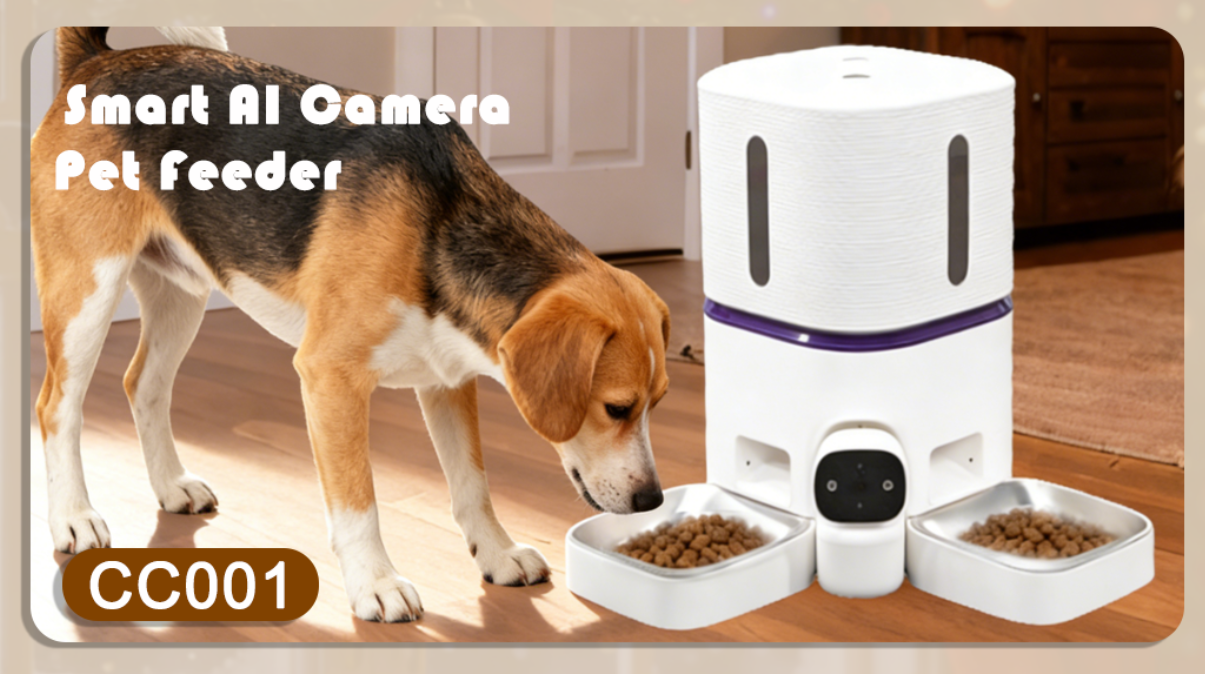
Smart pet devices do not reduce stress by offering novelty, interaction, or advanced features. Their value during holidays lies in a far narrower function: preserving consistency when human behavior becomes unpredictable.
When evaluated through this lens, their effectiveness becomes both clearer—and more limited.
4.1 Maintaining Time-Based Consistency
One of the most reliable predictors of stress during holidays is irregular timing, particularly around feeding.
Automatic feeders can help by:
Delivering meals at fixed times regardless of household activity
Maintaining consistent portion sizes
Preventing delays caused by gatherings, travel, or altered sleep schedules
This does not calm pets in an emotional sense. Instead, it removes a primary source of uncertainty. For animals that rely on temporal patterns, predictability itself acts as a stabilizing factor.
4.2 Reducing Resource Availability Uncertainty
During busy periods, resources are often present but not reliably accessible.
Smart water fountains and automated litter systems can help ensure:
Continuous access to clean water
Fewer gaps caused by forgetfulness or postponed maintenance
More stable conditions across multiple days of increased activity
These devices reduce stress indirectly by minimizing moments where pets must adapt to sudden resource limitations.
4.3 Limiting the Impact of Human Error
Holiday care issues are rarely caused by neglect. They are caused by disruption.
Smart devices are most effective when they replace actions that humans perform inconsistently during holidays, such as:
Feeding at the same time every day
Monitoring water levels amid distractions
Maintaining baseline hygiene routines
By automating these specific tasks, devices lower the probability of routine breakdowns—not because they are intelligent, but because they are reliable.
4.4 Supporting Multi-Pet Environments
In multi-cat households, stability depends on more than timing alone.
Automated systems can help by:
Keeping shared resources usable for longer periods
Reducing competition driven by delayed cleaning or inconsistent availability
Preserving familiar usage patterns despite increased household traffic
This support is situational but meaningful when routine disruptions occur repeatedly over short periods.
4.5 What “Effective” Really Means in This Context
It is important to define effectiveness precisely.
During holidays, smart pet devices can:
Reduce the frequency of stress triggers
Lower the intensity of routine-related disruptions
Shorten the duration of unstable care patterns
They do not:
Eliminate stress
Address fear, anxiety, or emotional responses directly
Replace environmental management or human presence
Their contribution is preventative, not therapeutic.
5. What Smart Pet Devices Cannot Do

Understanding the limitations of smart pet devices is as important as understanding their benefits. Many expectations placed on these products during holidays stem from a misunderstanding of what stress is—and how it is triggered.
Smart devices can support routine. They cannot resolve stress at its source.
5.1 They Do Not Treat Anxiety or Fear
Holiday-related stress is often conflated with anxiety disorders or fear-based responses. These are not the same.
Smart pet devices:
Do not alter emotional perception
Do not reduce fear of noise, visitors, or unfamiliar environments
Do not provide reassurance or comfort in the psychological sense
When pets exhibit signs of fear—such as trembling, freezing, or panic—automation has no direct effect. These responses require environmental management, gradual exposure, or professional guidance, not technology.
5.2 They Cannot Compensate for Environmental Instability
Routine stability does not exist in isolation. It is shaped by the surrounding environment.
Smart devices cannot:
Reduce household noise levels
Control visitor behavior
Maintain territorial boundaries during increased foot traffic
If environmental disruption is severe, routine automation alone is insufficient. In such cases, consistent feeding or cleaning may coexist with heightened stress responses.
5.3 They Are Not Neutral When Introduced Too Late
One of the most common mistakes during holidays is introducing new devices during periods of disruption.
New equipment:
Alters spatial layout
Introduces unfamiliar sounds or movement
Requires an adjustment period
For sensitive pets, particularly cats, this can increase stress rather than reduce it. Devices intended to support stability must themselves be familiar before they can serve that role.
5.4 They Do Not Replace Observation or Care
Automation can reduce error, but it cannot replace attentiveness.
Smart devices cannot:
Interpret behavioral changes
Recognize subtle avoidance or hesitation
Respond to emotional needs in real time
Over-reliance on automation may delay recognition of stress signals, especially when owners assume “everything is handled.”
5.5 Why Overestimating Technology Creates Risk
When smart pet devices are viewed as comprehensive solutions, they may inadvertently mask emerging issues. Stress responses that could be addressed early through environmental adjustment may go unnoticed until they escalate.
This does not diminish the value of smart devices. It clarifies their role.
6. Using Smart Devices Responsibly During the Holidays
Smart pet devices are most effective when used as tools of consistency rather than as replacements for human attention. Responsible usage requires planning, preparation, and realistic expectations.
6.1 Introduce Devices Before Holidays
Pets, particularly cats, respond best to familiar objects and routines.
Start using automatic feeders, smart fountains, or self-cleaning litter boxes weeks in advance of peak holiday disruptions.
Allow pets to explore devices at their own pace. Reward calm interaction with praise or treats.
Avoid introducing multiple new devices simultaneously; gradual introduction reduces novelty-induced stress.
6.2 Maintain Core Routines
Even with automation, some routines still require human oversight:
Feeding: Ensure the feeder’s schedule matches your pet’s usual routine. Check that portions are correct and that devices are functioning properly.
Water: Monitor water levels and cleanliness regularly, even with smart fountains. Automated systems reduce gaps but do not guarantee optimal hydration.
Litter box: Check the collection tray and sensor functionality to maintain hygiene consistency. Automated cleaning reduces stress triggers but requires periodic verification.
6.3 Minimize Environmental Stressors
Automation cannot control every stress source. Proactive environmental management is crucial:
Visitors: Create quiet spaces where pets can retreat without interference.
Decorations and noise: Limit sudden changes in layout or loud holiday decorations near resting areas.
Multi-pet households: Monitor interactions and resource sharing, even with automated systems in place.
6.4 Observe Behavior Continuously
Smart devices provide consistency, but do not replace attentive observation:
Watch for subtle changes in eating, drinking, elimination, or activity levels.
Identify early signs of stress, such as hiding, hesitation, or decreased interaction.
Adjust environmental conditions or device usage as needed based on observed behaviors.
6.5 Align Expectations with Function
Remember the core principle:
Smart devices support consistency; they do not provide emotional reassurance.
They reduce the likelihood of routine-related stress.
They do not eliminate fear, anxiety, or the effects of environmental disruption.
Their effectiveness increases when combined with careful planning and ongoing observation.
7. Conclusion: Balancing Technology with Routine for Holiday Pet Care
Holiday seasons inevitably disrupt the routines that pets rely on for stability. Behavioral data and household observations consistently show that pets experience stress primarily when their access to predictable feeding, drinking, and elimination patterns is interrupted.
Smart pet devices can help by preserving these routines, ensuring that core needs are met even when human schedules become unpredictable. Automatic feeders, smart fountains, and self-cleaning litter boxes provide reliable consistency, which reduces the likelihood of stress triggers escalating during periods of high household activity.
However, technology has limits. Smart devices cannot eliminate stress, address fear, or replace attentive care. Their effectiveness depends on early introduction, correct usage, and integration with proactive environmental management.
7.1 Final Takeaways
Routine Disruption Drives Holiday Stress – Stress is triggered by changes in predictability, not the holidays themselves. Even short-term disruptions in feeding, water, or litter box access can elevate stress levels.
Smart Devices Can Support Consistency – Automatic feeders, smart fountains, and self-cleaning litter boxes help maintain schedules and resource availability. Their role is preventative: reducing the frequency and intensity of routine-related stress.
Smart Devices Cannot Replace Observation or Care – They do not address emotional responses, environmental instability, or fear-related behaviors. Misusing or over-relying on devices can mask early stress signals.
Responsible Use Maximizes Benefits – Introduce devices before holiday disruptions. Monitor behavior, maintain hygiene, and provide safe spaces. Align expectations with the device’s functional role: consistency, not emotional reassurance.
Consistency Matters More Than Technology – The true value of smart pet devices lies in supporting predictable routines, not in novelty or automation alone. When combined with attentive care and environmental management, they help pets navigate holidays with lower stress.
Closing Note – Understanding what smart pet devices can and cannot do allows pet owners to use technology wisely. By focusing on stability rather than overstated promises, pets experience a more predictable, comfortable environment, even amid the unpredictability of the holiday season.