
Large Dog Automatic Feeders: What Truly Defines a Feeder for Big Dogs?
Contents −
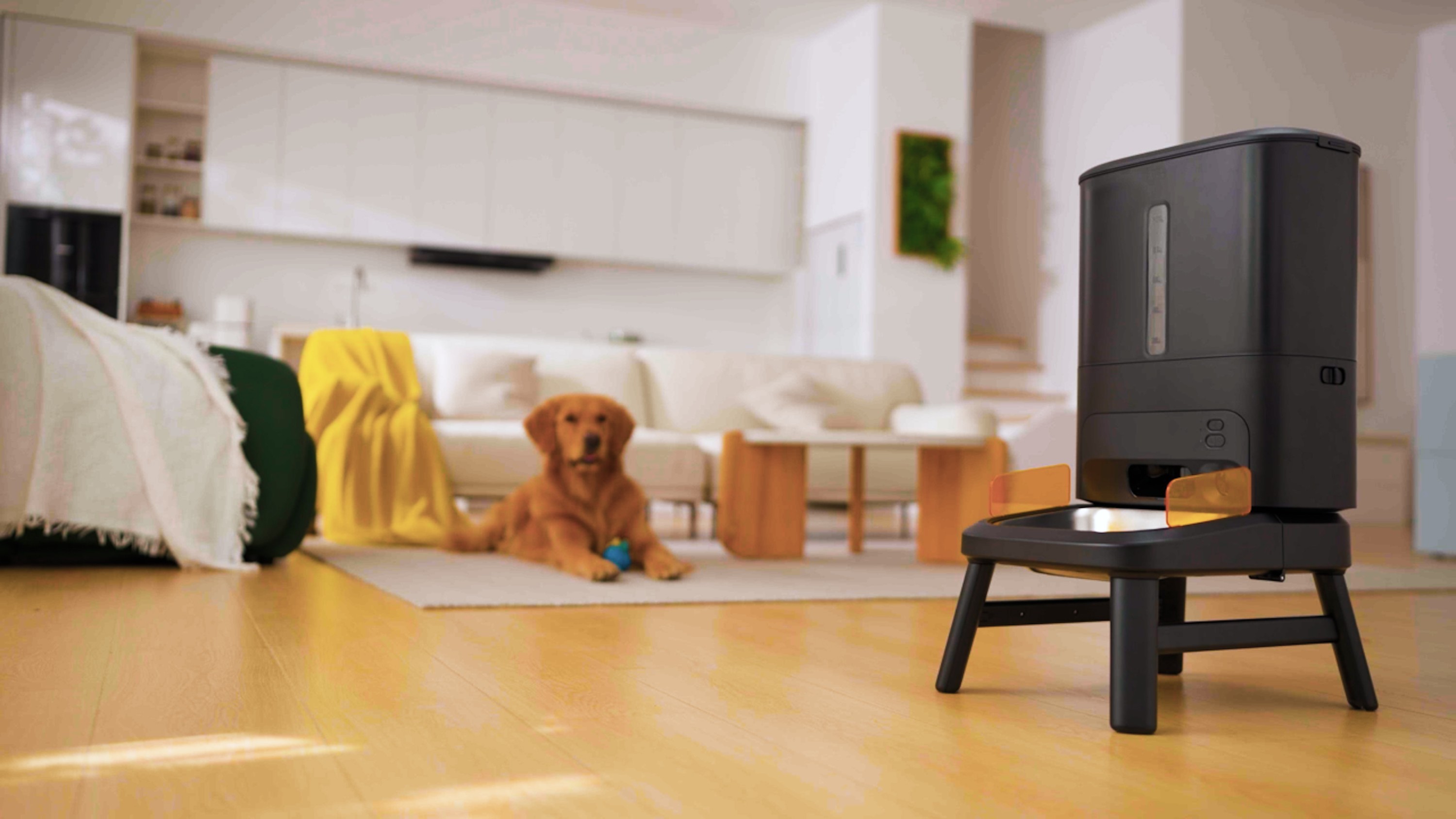
Introduction: Why Large Dogs Need Specialized Automatic Feeders
As more households choose large and giant dog breeds, feeding challenges that were once minor inconveniences have become daily pain points. Large dogs do not simply eat more food—they eat differently, require larger kibble, apply greater physical force to feeding equipment, and often follow structured feeding routines to maintain healthy weight and digestion. Yet many automatic feeders on the market are still designed around small and medium-sized pets.
Standard-capacity feeders typically struggle with large portion dispensing, frequent refills, food jamming, and instability when used by strong dogs. Over time, these limitations can lead to inconsistent feeding, equipment damage, and unnecessary stress for pet owners. For large dog households, an automatic feeder must be purpose-built—not just scaled up in size, but engineered to handle higher food volumes, stronger impact, and long-term reliability.
In this article, we will clearly define what qualifies as a true large dog automatic feeder, outline the essential hardware and software features it should include, and explain why AI-enabled feeders are becoming increasingly relevant for large-breed owners. We will also introduce Tikpaws’ upcoming AI camera large dog feeder, designed specifically to meet the real-world feeding demands of large and giant dogs.
What Is Considered a “Large Dog” in Feeding Scenarios?
In the context of automatic feeding, a “large dog” is defined less by breed labels and more by daily food intake, kibble size, and feeding behavior. Most large and giant breeds—such as Golden Retrievers, Labradors, German Shepherds, Huskies, Rottweilers, and similar working or sporting dogs—require significantly higher food volumes than small or medium-sized pets, often consuming multiple large meals per day.
From a feeding equipment perspective, large dogs typically eat larger kibble designed to support joint health and slow digestion. These kibbles place greater demands on the feeder’s dispensing system, increasing the risk of jamming or inconsistent portion delivery if the feeder is underpowered. In addition, large dogs tend to eat faster and with more physical force, which can easily destabilize lightweight feeders or damage weak internal components over time.
For these reasons, a feeder suitable for large dogs must be evaluated based on functional feeding requirements rather than breed name alone. High daily intake, large kibble compatibility, strong dispensing reliability, and structural stability are the real indicators that define a “large dog” feeding scenario—and they form the foundation for selecting an appropriate automatic feeder.
What Qualifies as a True Large Dog Automatic Feeder?
Not every automatic feeder with a bigger food bin is suitable for large dogs. A true large dog automatic feeder must be engineered to handle higher food volumes, larger kibble, and stronger physical interaction on a daily basis. Several clear criteria distinguish a purpose-built large dog feeder from standard models.
Sufficient food capacity is the first requirement. Small feeders in the 3–6L range often require frequent refilling and are impractical for large dogs with high daily intake. A large dog feeder should provide extended autonomy, allowing multiple days of feeding without constant attention, especially for working owners or multi-dog households.
A powerful and reliable dispensing system is equally critical. Large kibble increases resistance inside the food outlet, and weak motors or poorly designed augers frequently lead to food jamming or incomplete portions. A true large dog feeder must use reinforced internal components and a dispensing mechanism capable of delivering large portions consistently.
Structural stability and durability are also non-negotiable. Large dogs can easily tip lightweight feeders or damage thin plastic housings. A wide base, balanced weight distribution, and robust materials are essential to ensure safe, long-term use. Together, these elements define whether a feeder is genuinely suitable for large dogs or simply a scaled-up version of a small-pet product.
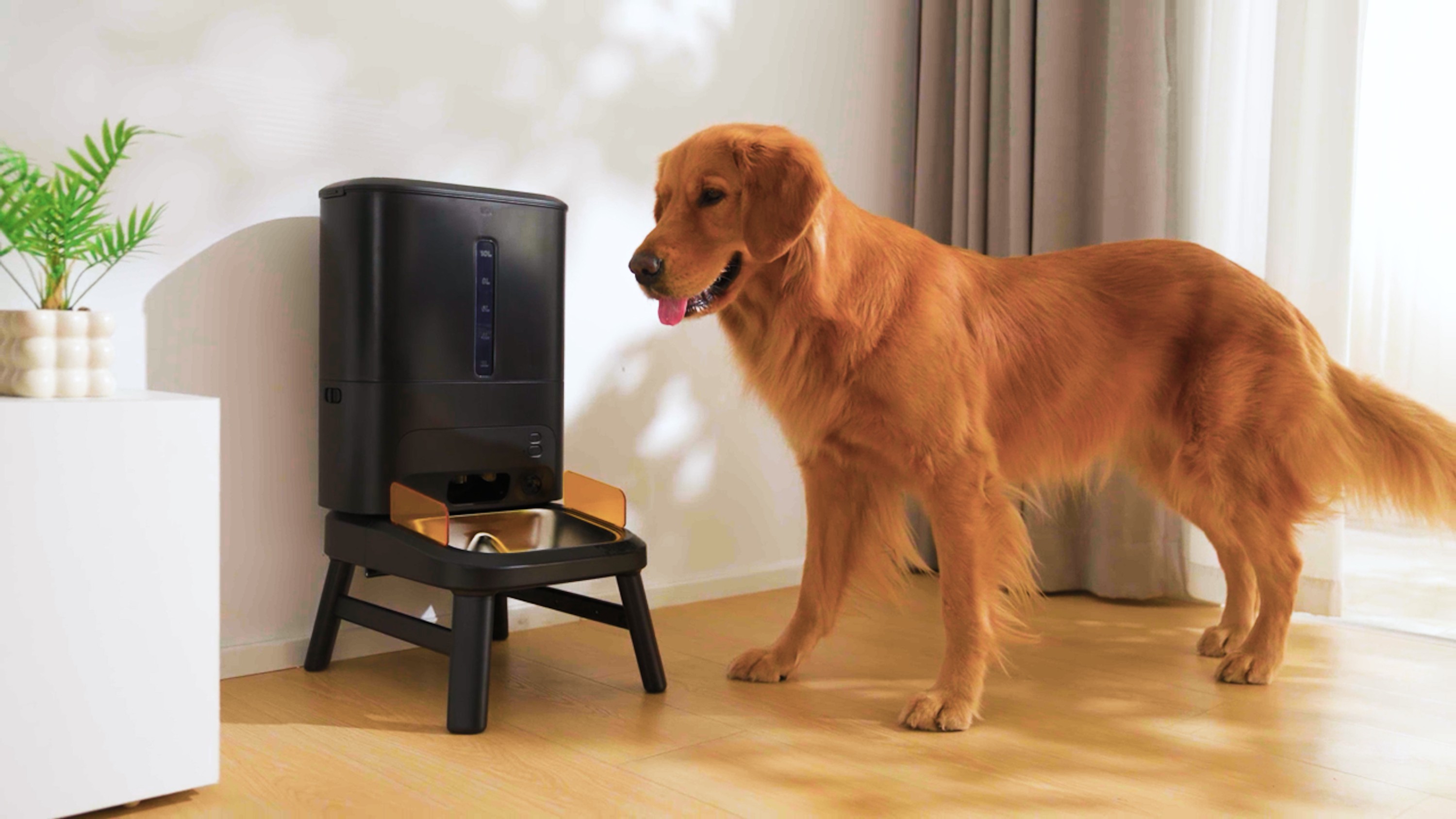
Essential Features a Large Dog Feeder Should Have
Beyond basic size considerations, a large dog automatic feeder must deliver reliable performance under demanding daily use. These features form the baseline expectations for large-dog households and are critical to maintaining consistent feeding routines.
A large-capacity food hopper is essential to support high daily intake and reduce refill frequency. Equally important is accurate portion control at larger serving sizes, ensuring each meal delivers sufficient nutrition without overfeeding. The feeder should allow flexible scheduling, including multiple meals per day, to support digestive health and weight management in large breeds.
From a usability standpoint, manual feeding controls provide immediate flexibility, while power-off memory or battery backup protects feeding schedules during outages. Given the volume of food dispensed, easy disassembly and cleaning are also crucial to prevent residue buildup and maintain hygiene over time.
Collectively, these functions define the minimum standard for a large dog feeder. Without them, even a high-capacity device may fall short in real-world large-dog feeding scenarios, leading to inconsistent meals, increased maintenance, and reduced reliability.
Pet Ownership Statistics in the U.S. and Europe
Before diving further into large-dog feeding needs, it is useful to understand the broader context of dog ownership in major Western markets—the United States and Europe—since these regions represent a significant portion of demand for smart pet products.
In the United States, pet ownership remains high and continues to grow. Approximately 66 percent of U.S. households own at least one pet, and dogs are the most popular companion animal. Around 65 million households report owning a dog, making canines the leading type of pet ahead of cats and fish.[Dogster] According to recent veterinary association data, roughly 45.5 percent of American households have a dog, translating to an estimated around 59.8 million households with at least one canine companion.[新浪财经]
In Europe, dog ownership is also substantial, though it varies by country. Major European markets such as the United Kingdom have more than 11 million dogs, with about one-third of households owning a dog.[PetfoodIndustry] Germany follows closely with over 10 million pet dogs and high ownership rates across the continent.[PetfoodIndustry] Overall, around 25 percent of European households own a dog, highlighting the significant role of canines in household pet ecosystems across the region.[Dogster]
These figures illustrate robust and sustained demand for dog-centric products in key Western markets—a context that makes purpose-built solutions for large breeds, including smart automatic feeders, increasingly relevant to pet owners who prioritize convenience, health, and reliability.
Why AI Camera Feeders Are Becoming the New Standard for Large Dogs
As large dogs are increasingly integrated into busy households, feeding is no longer viewed as a purely mechanical task, but as part of a broader care and monitoring routine. Large and giant breeds are often left alone for longer periods during the day, and missed meals, food jamming, or overeating can have more immediate health consequences due to their higher intake requirements. This is where AI camera–enabled feeders are starting to redefine expectations.
Unlike traditional automatic feeders, AI camera feeders allow owners to visually confirm that food has been successfully dispensed and that the dog is actually eating. For large dogs, this is particularly important, as larger kibble and higher portions increase the risk of partial dispensing or blockage—issues that may go unnoticed without visual feedback. Real-time video access also helps owners observe eating speed, posture, and behavioral changes that could indicate digestive discomfort or appetite issues.
AI-powered recognition further elevates this experience by distinguishing between normal activity and actual feeding events. Instead of relying solely on scheduled commands, owners gain data-backed confirmation and feeding records. For large-dog owners who value control, reassurance, and long-distance supervision, AI camera feeders are quickly becoming not just a premium feature, but a practical standard in modern large-dog feeding solutions.
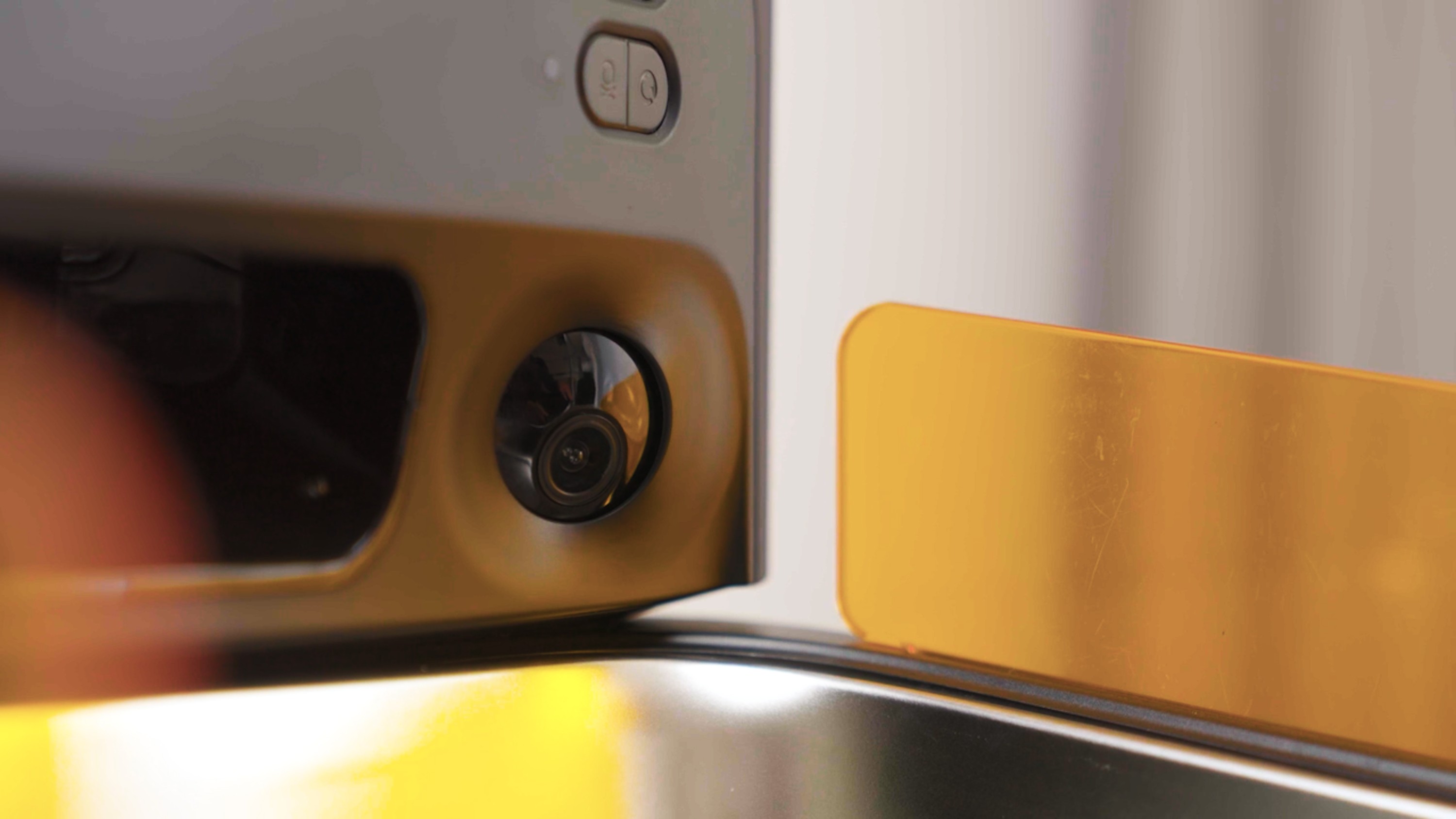
Tikpaws Upcoming AI Camera Large Dog Feeder: Key Specifications
Built specifically to address the real feeding demands of large and giant dogs, the upcoming Tikpaws AI camera feeder is designed around capacity, strength, and long-term reliability rather than compact form factor. At its core is an extra-large 15-liter food hopper, a capacity level that clearly positions it within the large-dog category. This volume supports multi-day feeding for large breeds and significantly reduces refill frequency, even for dogs with high daily intake.
The feeder is engineered to handle large-size kibble commonly used by big dogs, with an internal dispensing structure designed to minimize jamming under heavier food loads. Unlike feeders adapted from small-pet designs, the Tikpaws large dog feeder emphasizes stability and structural reinforcement to withstand stronger physical interaction during daily use.
Integrated into the system is an AI-enabled camera, enabling real-time visual confirmation of feeding events and laying the foundation for intelligent feeding management. Rather than being an add-on feature, the camera is positioned as a core component of the feeding experience—supporting both monitoring and data-driven feeding oversight for large-dog households.
Core Functions of the Tikpaws Large Dog Feeder
In addition to its large-capacity design, the Tikpaws AI camera large dog feeder is built around a set of core functions intended to deliver consistent, hands-off feeding for large and giant breeds. The feeder supports scheduled automatic feeding, allowing owners to create structured daily meal plans that align with the higher intake needs of large dogs.
Portion control is optimized for large serving sizes, ensuring each meal delivers sufficient food in a single feeding cycle without requiring repeated dispensing. A reinforced anti-jam food outlet helps maintain reliable operation when dispensing large kibble, reducing the risk of missed or incomplete meals. For added flexibility, a manual feeding option allows owners to dispense food on demand.
To ensure feeding continuity, the feeder includes power-failure protection, preserving feeding schedules during temporary outages. These foundational functions focus on reliability and predictability—two factors that are especially critical when feeding large dogs whose nutritional needs leave little margin for error.
What Can the Tikpaws App Do?
The Tikpaws feeder is supported by a dedicated mobile app that extends control beyond basic automation and turns feeding into a remotely managed process. Through the app, owners can create, adjust, and manage feeding schedules at any time, ensuring large dogs receive meals consistently even when household routines change.
Portion sizes can be precisely configured in grams per meal, allowing better alignment with veterinary feeding recommendations for large and giant breeds. The integrated AI camera feed enables real-time viewing, giving owners visual confirmation that food has been dispensed and consumed. This is particularly valuable for large dogs, where higher food volumes increase the importance of monitoring successful feeding.
The app also provides feeding records and history tracking, helping owners identify patterns such as skipped meals or changes in eating behavior. Remote manual feeding, along with system alerts and notifications—including low food warnings or abnormal feeding events—further enhances reliability. Together, these app functions support informed, flexible, and data-driven feeding management tailored to large-dog households.
Who Is a Large Dog Automatic Feeder Best For?
Large dog automatic feeders are not just convenient—they address specific needs for certain types of dog owners and households. They are particularly beneficial for working professionals or individuals who spend extended hours away from home, ensuring their pets are fed consistently without relying on neighbors or family members.
Households with multiple large dogs also gain significant advantages, as high-volume feeders reduce the frequency of refills and help prevent disputes over portions. Owners who follow structured feeding plans—for weight management, digestive health, or veterinary dietary recommendations—can benefit from precise portion control and scheduling capabilities.
Additionally, these feeders are ideal for frequent travelers or remote pet parents, as AI camera integration and app monitoring provide peace of mind, allowing owners to observe and manage feeding in real time. In short, any household with large or giant breeds that prioritizes reliability, convenience, and data-backed feeding oversight will find a purpose-built large dog feeder indispensable.
Conclusion: Choosing the Right Feeder for Large Dogs
Selecting the right automatic feeder for a large dog goes beyond simply choosing a bigger container. Owners must consider capacity, dispensing reliability, structural stability, and intelligent monitoring to ensure consistent, safe, and stress-free feeding. A feeder that meets these requirements not only supports proper nutrition but also reduces maintenance and oversight for busy households.
AI-powered large dog feeders, like Tikpaws’ upcoming 15L model, combine high-capacity feeding, reinforced hardware, and app-controlled monitoring to address the unique challenges of large and giant breeds. By integrating real-time AI camera feedback, precise portion control, and flexible scheduling, such feeders provide both convenience and reassurance—making them a practical, modern solution for large-dog owners seeking to balance care, health, and daily routine.
With the right large dog feeder, pet owners can ensure their dogs eat consistently, safely, and comfortably, while freeing themselves from the stress and limitations of standard feeding solutions.
FAQ: Large Dog Automatic Feeders
1. What defines a “large dog” in terms of automatic feeders?
A “large dog” feeder is designed for breeds that consume higher volumes of food, require larger kibble, and exert more force during feeding. Common large and giant breeds include Labradors, Golden Retrievers, German Shepherds, Huskies, and Rottweilers. Key indicators are daily intake, kibble size compatibility, and the need for durable, stable feeder construction.
2. What capacity should a large dog feeder have?
For large dogs, a feeder should typically hold 10–15 liters of kibble to support multiple days of feeding without frequent refills. Tikpaws’ upcoming large dog feeder offers 15L capacity, suitable for single or multi-dog households.
3. Can large kibble be used in standard automatic feeders?
Not reliably. Standard feeders often jam when dispensing large kibble due to insufficient motor power or narrow outlets. Large dog feeders are specifically designed with reinforced dispensing systems to handle bigger kibble consistently.
4. What are the key features to look for in a large dog feeder?
• High-capacity hopper (10–15L or more)
• Accurate large-portion dispensing
• Durable, anti-tip construction
• Scheduled automatic feeding and manual feed option
• Easy cleaning design
• Power-off memory or battery backup
5. What additional benefits does an AI camera feeder provide?
AI camera feeders allow owners to confirm meals are dispensed and eaten, monitor eating behavior and speed, track feeding history and generate reports, receive notifications for low food, missed meals, or unusual activity.
6. Who should consider a large dog automatic feeder?
Owners of large or giant breeds with high daily food requirements, multi-dog households, busy professionals or travelers who are away from home for extended periods, families following structured feeding plans for health or weight management.
7. Can the Tikpaws app control feeding remotely?
Yes. The app allows users to set and adjust feeding schedules, control portion sizes in grams, view live AI camera feed, receive notifications and alerts, dispense food manually from anywhere.
8. Is the feeder easy to clean?
Yes. The Tikpaws large dog feeder is designed for easy disassembly, allowing the hopper, bowl, and dispensing mechanism to be cleaned quickly, which is essential for hygiene and preventing kibble buildup.
9. Can this feeder handle multiple dogs?
Yes. The large capacity and portion control features make it suitable for feeding multiple large dogs, though supervision may be recommended if dogs feed simultaneously to prevent resource guarding.
10. Is the feeder safe for unsupervised use?
Yes, when used as instructed. Its stable, reinforced construction prevents tipping, while AI monitoring and app notifications allow owners to remotely check feeding events, ensuring safety and reliability for large dogs.