
Smart Pet Fountain Filters Explained: What They Can and Cannot Remove (2025 Update)
Date: 2025-12-16 Categories: Guides Hits: 1230
Smart Pet Fountain Filters Explained: What Can Be Filtered — and What Cannot (2025 Update)
I. Introduction: Why Pet Fountain Filters Still Confuse Buyers in 2025
II. How Smart Pet Fountain Filters Work: The Basic Filtration Logic
III. Common Filter Materials Used in Smart Pet Fountains (2025 Overview)
V. What Smart Pet Fountain Filters Cannot Remove (Critical Limitations)
VII. Filter Maintenance: Why Performance Drops Faster Than You Expect
X. Conclusion: Filters Improve Water — Not Replace Responsibility
I. Introduction: Why Pet Fountain Filters Still Confuse Buyers in 2025
In 2025, smart pet water fountains have become a common upgrade for cat households, especially in urban environments. Nearly every product claims to offer “advanced filtration,” “cleaner water,” or even “sterilized drinking water.” Yet despite these claims, confusion around what pet fountain filters actually do — and what they cannot do — remains widespread.
One major reason is unclear terminology. Many buyers assume that filtration, purification, and sterilization are interchangeable concepts. In reality, they refer to very different processes. A filter can improve water quality, but it does not turn tap water into medical-grade or bottled-grade water. When expectations exceed the physical limits of filtration, disappointment — or worse, unsafe assumptions — can follow.
Another source of confusion is over-simplified marketing. Phrases such as “99% clean water” or “complete protection” are rarely accompanied by technical explanations. Without understanding filter materials, water flow design, or maintenance requirements, pet owners may believe a fountain can compensate for poor cleaning habits or questionable water sources. It cannot.
The issue is particularly relevant for multi-cat households, where water consumption is higher and contaminants accumulate faster. In these environments, filters play an important role in improving taste and removing visible debris, but their limitations become even more critical to understand.
This article aims to clarify three essential questions:
What smart pet fountain filters can realistically remove
What they cannot remove, regardless of price or filter count
How to evaluate filtration systems based on function rather than marketing claims
By separating facts from assumptions, pet owners can make safer, more informed decisions — and avoid relying on filtration systems for tasks they were never designed to perform.
II. How Smart Pet Fountain Filters Work: The Basic Filtration Logic
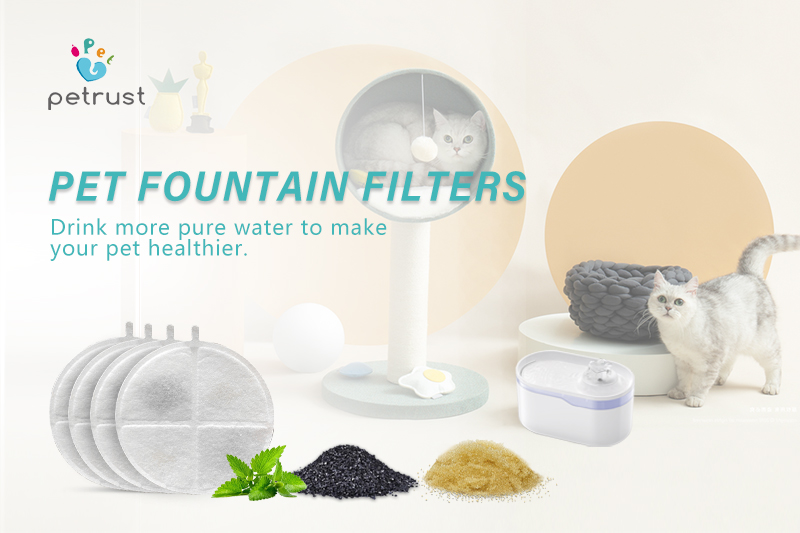
At its core, a smart pet fountain filter works through mechanical and chemical filtration, not purification or sterilization. Understanding this distinction is essential before evaluating filter performance or comparing different products.
Most pet fountains rely on a circulating water system. Water is continuously drawn from the reservoir, passes through one or more filter layers, and is then redistributed for drinking. Each cycle slightly improves water clarity and taste, but no single pass can eliminate all contaminants. Filtration effectiveness depends on repetition, water flow design, and filter condition.
Filtration Is a Passive Process
Unlike active treatment systems used in household water purifiers, pet fountain filters do not neutralize pathogens or chemically alter water. Instead, they function by:
Physically trapping particles such as hair, dust, and food debris
Adsorbing certain compounds, such as chlorine or odor-causing organic matter
This passive nature explains why filters require regular replacement. Once filter media become saturated, their ability to trap or adsorb contaminants drops sharply, even if the water still appears clear.
Water Flow Matters More Than Filter Quantity
A common misconception is that more filters automatically mean better filtration. In practice, water flow control plays a far more important role. If water moves too quickly, contaminants pass through without sufficient contact time. If flow is too slow, stagnation can occur, increasing bacterial growth inside the system.
Well-designed fountains balance:
Stable circulation speed
Even water distribution across filter surfaces
Minimal dead zones where debris can accumulate
Without proper flow design, additional filter layers offer diminishing returns.
Filtration Improves Water — It Does Not Transform It
Filters are designed to enhance drinking quality, not to correct fundamentally poor water sources. If tap water contains high levels of dissolved contaminants or microbial risks, a fountain filter alone cannot make it safe. In such cases, filtration should be viewed as a supporting layer, not a primary safety solution.
Understanding this basic filtration logic allows buyers to evaluate smart pet fountains based on engineering principles, rather than marketing language. In the next section, we will examine the most common filter materials used in pet fountains in 2025 — and what each material is actually capable of doing.
III. Common Filter Materials Used in Smart Pet Fountains (2025 Overview)
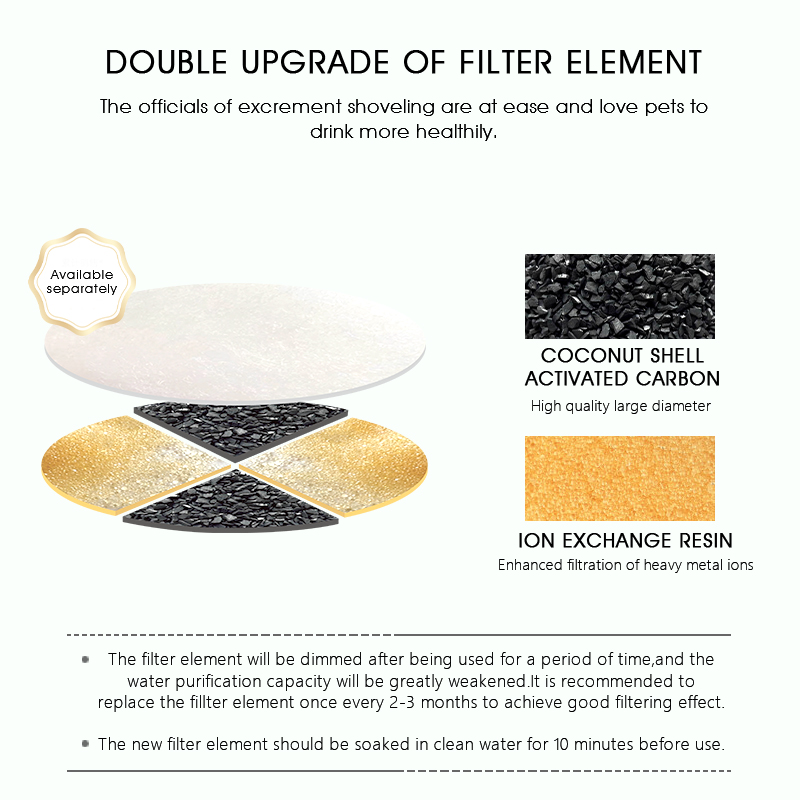
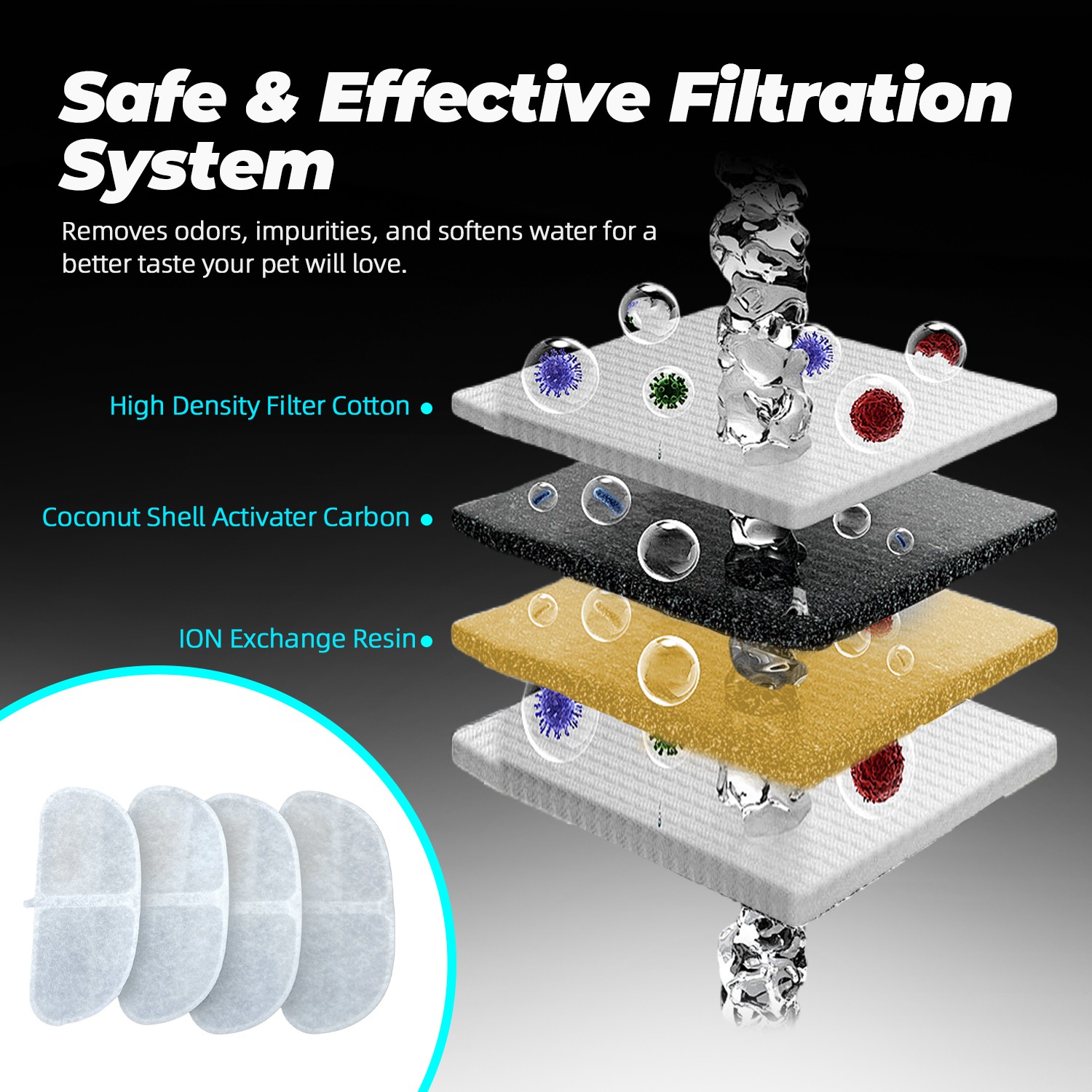
Most smart pet water fountains in 2025 use multi-material filter systems rather than relying on a single filtration medium. Each material serves a specific purpose, and understanding these roles is far more important than counting how many layers a filter contains.
3.1 Activated Carbon Filters
Activated carbon remains the most widely used filtration material in pet fountains.
Its primary function is adsorption, meaning it binds certain substances to its porous surface rather than filtering them out mechanically. In practical terms, activated carbon can:
Reduce chlorine taste and odor from tap water
Absorb some organic compounds responsible for unpleasant smells
Improve overall water palatability for pets
However, activated carbon has clear limitations. It does not remove bacteria, viruses, or dissolved minerals, and its effectiveness declines rapidly once saturated. In multi-cat households, this saturation can occur much faster than many users expect, even if the water still appears clean.
3.2 PP Cotton and Pre-Filters
PP cotton (polypropylene fiber) is commonly used as a pre-filtration layer. Its role is straightforward but essential.
This material is designed to:
Capture pet hair, food crumbs, and visible debris
Prevent larger particles from reaching the pump or finer filter layers
Support stable water circulation by reducing clogging
While PP cotton contributes to cleaner-looking water, it does not improve chemical water quality. Its value lies in protection and system stability rather than purification.
3.3 Ion Exchange Resin (When Included)
Some smart fountains incorporate ion exchange resin, particularly in regions with hard water.
Ion exchange resin can:
Reduce calcium and magnesium ions
Help prevent scale buildup inside the fountain
Improve taste in mineral-heavy water areas
That said, this material is not universally necessary. In areas with relatively soft tap water, ion exchange offers limited benefits and may even alter taste in ways pets dislike. It is a situational component, not a default requirement.
3.4 Multi-Layer Filter Structures: Design Over Quantity
In 2025, most mid-to-high-end fountains promote multi-layer filters. However, more layers do not automatically equal better performance.
Effective filtration depends on:
Logical layer sequencing (pre-filter → adsorption → optional resin)
Even water exposure across all materials
Easy access for cleaning and replacement
Poorly designed multi-layer filters can suffer from uneven saturation, restricted flow, or hidden bacterial buildup. As a result, filter structure and water path design matter more than the number of materials used.
Understanding these common filter materials helps buyers evaluate fountains based on function rather than feature lists. In the next section, we will define exactly what these filters can remove — and where their capabilities end.
IV. What Smart Pet Fountain Filters Can Remove
When used correctly, smart pet fountain filters are effective at improving water clarity, taste, and daily hygiene. However, their benefits are specific and measurable, not universal. Understanding what filters can reliably remove helps set realistic expectations and encourages proper maintenance.
Removal of Visible Debris and Particulates
The most immediate and noticeable effect of filtration is the removal of physical contaminants. These include:
Pet hair and fur
Food particles and saliva residue
Dust and airborne debris
Pre-filters and fiber layers are specifically designed for this purpose, preventing debris from circulating back into the drinking area and reducing pump blockage.
Reduction of Unpleasant Odors and Taste
Activated carbon plays a key role in odor and taste improvement. By adsorbing chlorine and certain organic compounds, filters can make tap water more appealing to cats, especially those sensitive to smell.
This improvement often leads to:
Increased drinking frequency
Reduced hesitation around stagnant water
Better overall hydration behavior
While taste enhancement is subtle, it is one of the most practical benefits of filtration.
Suspension of Fine Particles
Multi-layer filters can reduce suspended particulates that make water appear cloudy. These particles may not be visible individually but contribute to murky water over time, particularly in multi-cat households.
By gradually trapping these fine particles through repeated circulation, fountains help maintain clearer water between cleaning cycles.
Support for Daily Hygiene — Not Full Sanitation
It is important to emphasize that filtration supports daily water hygiene, not complete sanitation. Filters help slow down contamination buildup and improve water quality between cleanings, but they do not eliminate the need for:
Regular water replacement
Manual cleaning of the fountain
Timely filter replacement
When used as part of a consistent care routine, filtration improves the drinking experience and reduces common issues associated with stagnant bowls.
In the next section, we will address the most critical and often misunderstood topic: what smart pet fountain filters cannot remove, regardless of filter type, price, or layer count.
V. What Smart Pet Fountain Filters Cannot Remove (Critical Limitations)
Despite their benefits, smart pet fountain filters have strict and unavoidable limitations. No matter how advanced a filter appears, or how premium a product is positioned, certain contaminants simply fall outside the scope of filtration. Ignoring these limits can lead to unsafe assumptions about water quality.
Bacteria and Viruses
Standard pet fountain filters do not eliminate bacteria or viruses. Mechanical filters may trap some microorganisms incidentally, but they are not designed to neutralize or kill pathogens.
Once bacteria enter the system — through saliva, airborne exposure, or contaminated water — they can persist and even multiply, especially in warm or stagnant areas. Filtration alone cannot prevent this process.
Dissolved Heavy Metals and Chemical Contaminants
Most harmful substances in water are dissolved, not suspended. This includes:
Lead and other heavy metals
Industrial or agricultural chemical residues
Nitrates and similar compounds
Pet fountain filters lack the treatment capacity to remove these contaminants at safe levels. If the source water is compromised, filtration will not make it safe for long-term consumption.
Severe Water Source Issues
Filters are not a solution for fundamentally unsafe water sources. If tap water quality is questionable, relying on a pet fountain filter creates a false sense of security.
In such cases, water should be treated or sourced appropriately before entering the fountain. The fountain can enhance water presentation, but it cannot correct systemic water quality problems.
Misuse and Over-Reliance
Perhaps the most overlooked limitation is human behavior. Filters cannot compensate for:
Infrequent cleaning
Overused or expired filter cartridges
Biofilm buildup inside the system
A neglected fountain can become less hygienic than a regularly cleaned bowl, regardless of how advanced its filter system may be.
Recognizing these limitations is not a criticism of smart pet fountains — it is a necessary step toward using them responsibly. In the next section, we will clarify how UV sterilization differs from filtration, and when it adds meaningful value to a fountain system.
VI. UV Sterilization vs Filtration: What’s the Difference?

Filtration and UV sterilization are often presented together in smart pet fountains, but they serve fundamentally different purposes. Understanding how UV works — and where it does not — is essential to evaluating whether it adds real value or simply increases perceived sophistication.
How UV Sterilization Works
UV sterilization uses ultraviolet light, typically UV-C, to disrupt the DNA of microorganisms. When bacteria or certain viruses are exposed to sufficient UV intensity for enough time, they lose the ability to reproduce.
Unlike filters, UV systems:
Do not remove particles or debris
Do not change taste or odor
Do not trap contaminants
They act only on microorganisms that pass directly through the UV exposure zone.
What UV Can Do in a Pet Fountain
When properly integrated, UV can:
Reduce microbial growth in circulating water
Help control bacterial buildup between cleanings
Support overall system hygiene in warm environments
UV is particularly useful in multi-cat households, where saliva and organic matter enter the system more frequently.
What UV Cannot Do
UV sterilization has clear limits:
It does not affect contaminants shielded by debris or biofilm
It does not sterilize stagnant water outside the flow path
It does not replace physical cleaning or filter replacement
If water flow design is poor, UV effectiveness drops sharply. Exposure time and coverage are critical factors often omitted from product descriptions.
When UV Is a Meaningful Upgrade — and When It Is Not
UV adds value when:
Paired with effective filtration and stable circulation
Used by households with multiple pets
Supported by regular cleaning routines
UV becomes a marketing feature when:
Used as a substitute for cleaning
Promoted as “complete sterilization”
Added without proper flow and exposure design
In short, UV complements filtration; it does not replace it. A well-balanced system combines both thoughtfully, without overstating their individual capabilities.
In the next section, we will examine why filter performance often declines faster than users expect — and how maintenance habits directly impact water quality.
VII. Filter Maintenance: Why Performance Drops Faster Than You Expect
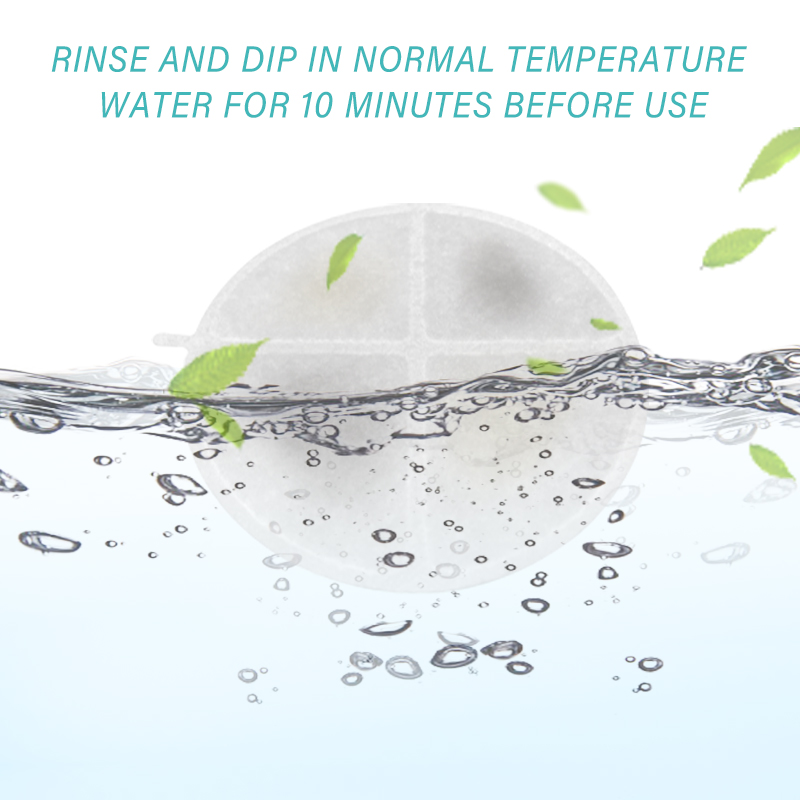
One of the most common frustrations reported by pet owners is that a fountain’s water quality seems to decline long before the filter’s advertised lifespan ends. In most cases, this is not a defect — it is a result of how filters function under real-world conditions.
Filter Saturation Happens Gradually — and Invisibly
Filter media do not fail suddenly. Instead, they become progressively saturated as they trap particles and adsorb compounds. Long before a filter looks dirty, its internal capacity may already be exhausted.
This is especially true for activated carbon, which can no longer bind odors or chemicals once its pores are filled. Clear water does not necessarily indicate effective filtration.
Multi-Cat Homes Accelerate Wear
In households with multiple pets:
More saliva enters the system
Organic matter accumulates faster
Circulation cycles increase daily
As a result, filters reach saturation significantly sooner than in single-pet environments. Using standard replacement timelines without adjustment often leads to declining performance.
Common Maintenance Mistakes
Several routine habits reduce filter effectiveness:
Rinsing filters with tap water without replacing them
Extending use beyond recommended cycles
Cleaning only visible parts of the fountain
These practices may maintain appearance but do little to restore filtration capacity.
Maintenance Is Part of the Filtration System
A filter’s performance is inseparable from how the fountain is maintained. Effective routines include:
Regular water replacement
Full disassembly cleaning
Timely filter changes based on usage, not packaging claims
Filters are consumables by design. Treating them as long-term components undermines their purpose and compromises water quality.
In the next section, we will outline how to choose the right filter system for your specific household, based on pet count, water conditions, and usage patterns.
VIII. How to Choose the Right Filter System for Your Home
Choosing a smart pet fountain filter system is less about selecting the “most advanced” option and more about matching filtration capabilities to real household conditions. Over-specifying leads to unnecessary cost, while under-specifying creates false expectations.
Single-Cat vs Multi-Cat Households
For single-cat homes, basic multi-layer filtration is often sufficient when paired with regular cleaning. In multi-cat households, higher water turnover and increased organic contamination place greater demands on both filters and circulation design.
In these environments, priority should be given to:
Stable water flow
Easily replaceable filters
Materials that resist odor buildup
Water Source Considerations
Tap water quality varies significantly by region. In areas with hard water, scale buildup can affect both taste and mechanical components. In these cases, ion exchange elements may provide benefits.
However, if local water contains dissolved contaminants of concern, filtration alone is not an adequate solution. Water quality should be addressed before it enters the fountain.
Managing Expectations
Filters are designed to improve water quality, not guarantee purity. Buyers should view filtration as a supportive system rather than a complete safeguard.
Understanding this distinction helps avoid:
Over-reliance on technology
Neglect of cleaning routines
Misinterpretation of product claims
Practical Evaluation Criteria
When comparing filter systems, focus on:
Clarity of filter structure and replacement process
Transparency in maintenance recommendations
Compatibility with household routines
A filter system that aligns with daily habits will outperform a more complex system that is poorly maintained.
In the final sections, we will address common myths surrounding pet fountain filters and summarize best practices for responsible use.
IX. Common Myths About Pet Fountain Filters (Debunked)
Even experienced pet owners can fall prey to common misconceptions about smart pet fountain filters. Clarifying these myths ensures users make informed decisions rather than relying on marketing claims.
Myth 1: “The More Expensive the Filter, the Safer the Water”
Price often reflects brand positioning or material marketing, not actual performance. A higher-priced filter does not guarantee pathogen removal or better chemical filtration. Focus on material type, maintenance schedule, and design logic instead.
Myth 2: “UV Sterilization Eliminates the Need to Replace Filters”
UV systems only neutralize certain microorganisms under ideal conditions. They cannot remove hair, debris, or chemical compounds. Filter replacement is still essential for maintaining water clarity and taste.
Myth 3: “Filters Turn Tap Water into Pure or Bottled Water”
No smart pet fountain filter can make tap water equivalent to bottled or distilled water. Filters enhance water quality by removing particulates and improving taste, but they do not remove dissolved heavy metals, most chemicals, or pathogens.
Myth 4: “More Filter Layers Always Mean Better Filtration”
Filter quantity alone does not guarantee better results. Proper sequencing, water flow, and maintenance determine performance. Extra layers without design consideration can reduce efficiency and create stagnant zones.
Myth 5: “Cleaning Isn’t Necessary if the Fountain Has Filters”
Filters support hygiene but cannot replace manual cleaning. Biofilm, saliva, and algae can develop even in filtered systems. Regular cleaning is non-negotiable for safe and healthy water.
By understanding these myths and limitations, pet owners can use smart pet fountains effectively, maintain safe water, and select systems that match their household’s needs.
In the final section, we will provide a concise conclusion along with practical FAQ guidance for pet owners considering smart fountain filters.
X. Conclusion: Filters Improve Water — Not Replace Responsibility
Smart pet fountain filters are valuable tools for maintaining cleaner, better-tasting water, but they are not a substitute for proper hygiene, water quality, or responsible pet care. Filtration and UV sterilization systems improve the drinking experience and reduce debris or odor, yet they cannot remove all contaminants, pathogens, or dissolved chemicals.
Key takeaways:
Understand the distinction between filtration, purification, and sterilization
Choose filter materials and structures that match your household and water conditions
Maintain regular cleaning routines and replace filters according to real usage, not just suggested timelines
Treat UV sterilization as a complementary hygiene feature, not a replacement for cleaning or filter replacement
By combining thoughtful selection with consistent maintenance, pet owners can ensure their cats enjoy safe, appealing drinking water year-round.