
How to Reduce Pet Odor at Home
Date: 2025-11-25 Categories: Guides Hits: 1029
How to Reduce Pet Odor at Home | Expert Guide + Tikpaws Smart Litter Boxes
Table of Contents
Introduction: Why Pet Odor Happens More Often Than You Think
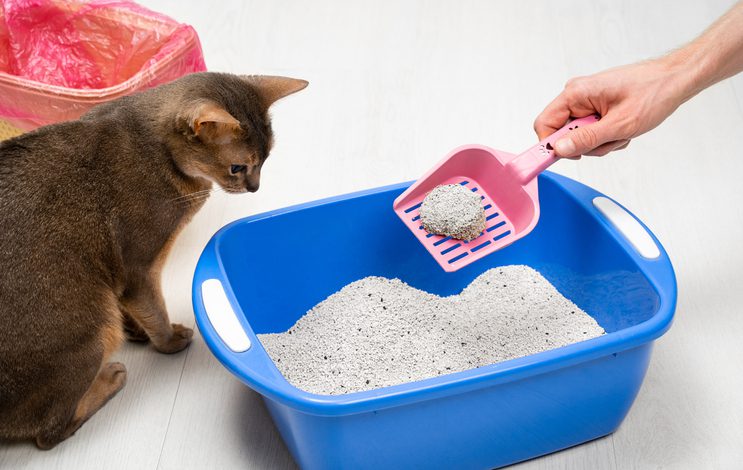
A clean litter box is the first step to reduce pet odor at home
Every pet owner eventually faces the same challenge: unpleasant pet odors that spread faster than you can clean. Whether it’s a litter box, a damp corner, or an overlooked spot under the sofa—pet smell builds up quietly, and visitors notice it before you do.
The good news is that pet odor removal doesn’t have to be a constant battle. This expert guide explains exactly how pet odor forms, how multi-cat homes differ from single-cat homes in terms of odor management, and what modern smart products (including the Tikpaws CB series) can do to keep your home consistently fresh with minimal effort.
From litter box odor control basics to advanced smart solutions, we’ll cover everything you need to eliminate pet odors for good.
1. Key Causes of Pet Odor in Homes
① Exposed or Uncovered Litter Boxes
A traditional litter tray leaves waste exposed to air, which is one of the main reasons pet odors persist. This means:
Ammonia smell escapes instantly (the most common pet odor culprit)
Solid waste odor lingers for hours, making it hard to reduce pet odor
Dust sticks to walls or surrounding areas, worsening odor buildup
If the litter box sits in a poorly ventilated area, the smell becomes even more concentrated—making litter box odor control much harder.
② Moisture & Humidity Build-Up

Moisture detection helps identify hidden sources of pet odor
Humidity amplifies pet odors significantly. When clumps stay damp or the room has poor airflow:
Bacteria multiply faster, increasing odor production
Litter breaks down and releases more ammonia (the main component of litter box odor)
Carpets and fabrics absorb the smell, making pet odor removal more difficult
High humidity + exposed waste = the fastest route to a smelly home. Controlling moisture is key for effective pet odor control.
③ Infrequent Scooping or Delayed Cleaning
Even the best litter can’t help if scooping falls behind. This is a major barrier to successful pet odor removal.
Typical issues that prevent effective litter box odor control:
Scooping only once per day (insufficient for multi-cat homes)
Forgetting to clean on busy days, allowing odor to build up
Odor returning even right after cleaning due to residual waste
This is why many pet owners switch to smart litter boxes for automatic cleaning—one of the most effective ways to reduce pet odor consistently.
2. Multi-Cat vs Single-Cat Home Odor Solutions
Single-Cat Homes
Pet odor accumulates more slowly
Once-daily cleaning may be sufficient for basic pet odor control
Main issue is ammonia smell after urination (easily managed with proper litter box care)
Traditional litter boxes can work, but smart options still simplify pet odor removal
Multi-Cat Homes

Multiple litter boxes help reduce pet odor in multi-cat homes
Pet odor builds up 3–5× faster than in single-cat homes
Daily scooping isn’t enough for effective litter box odor control
Cats may refuse to use a dirty box, leading to accidents and worse odors
Odor spreads quickly to fabrics and corners, requiring more aggressive pet odor removal
1 cat = 2 litter boxes
2 cats = 3 litter boxes
More cats = exponentially higher odor load. Combine multiple boxes with smart cleaning for best results.
This is why multi-cat families benefit most from automatic cleaning + enclosed designs—the most reliable combination for consistent pet odor reduction.
3. Tikpaws Smart Litter Boxes: Odor Reduction Features
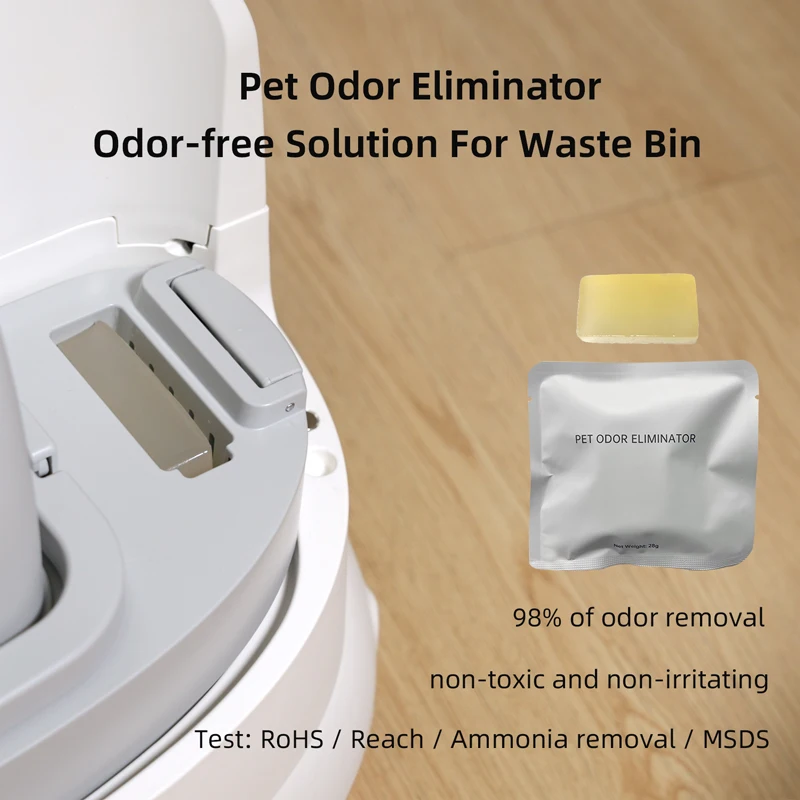
Tikpaws CB series smart litter box for effective pet odor removal
The Tikpaws CB series (CB001 / CB002 / CB004) is designed specifically to solve pet odor at its source—not just cover it up. These smart litter boxes combine multiple litter box odor control technologies to keep your home fresh.
① Automatic Waste Separation
Traditional litter boxes rely on your schedule, but Tikpaws smart litter boxes scoop immediately after each use, which is critical for pet odor reduction. This prevents:
Ammonia from building up (the primary cause of litter box odor)
Solids from sitting in open air and releasing odors
Humidity from activating odor-causing bacteria
Your home smells cleaner because waste doesn’t sit there for hours—the key to proactive pet odor control.
② Fully Enclosed Structure
All Tikpaws CB models use a sealed drum design that reduces odor spread by isolating waste inside the barrel—one of the most effective litter box odor control features.
Advantages for pet odor removal:
Odor doesn’t escape outward like with open trays
Keeps the smell contained even in small apartments (critical for urban pet owners)
Prevents multi-cat homes from “stirring up” odor when one cat digs after another
Reduces dust and ammonia exposure for both pets and humans
③ Activated Carbon + Odor-Control Gel Blocks
Tikpaws’ dual-layer deodorization system is a game-changer for pet odor removal:
Deodorizing gel block releases long-lasting neutralizing factors that target ammonia
Activated carbon filter absorbs and traps odor molecules
Neutralizes feces smell instead of masking it with artificial fragrances
Safe for pets and effective for long-term litter box odor control
The Tikpaws CB series combines activated carbon filters + deodorizing gel, offering double-layer protection for maximum pet odor reduction.
④ Anti-Stick Drum + Soft Silicone Inner Layer
Waste sticking to the drum wall is a major hidden odor source in traditional boxes. Tikpaws’ anti-stick design prevents this buildup, which is essential for thorough pet odor removal.
No buildup = no trapped smell. This feature also makes deep cleaning easier, supporting consistent litter box odor control.
4. Pet Odor Control Cleaning Timeline (Expert Frequency Guide)
Check the waste drawer for above-average waste levels (critical for multi-cat homes)
For multi-cat homes, empty the drawer every 1–2 days to maintain pet odor control
Wipe the entrance area if litter crumbs accumulate (prevents odor spread)
Ensure proper ventilation around the litter box area
For traditional boxes: scoop twice a day for effective litter box odor control
For smart boxes: wipe the outer shell if dusty (prevents odor-causing bacteria)
Check litter levels and top up as needed (sufficient litter helps with clumping and odor)
Replace activated carbon if you have two or more cats (key for ongoing pet odor removal)
Rinse removable silicone mats to eliminate trapped litter and odors
Clean the surrounding floor area to remove hidden litter particles
Check for signs of moisture buildup and address promptly
Deep-clean the litter box drum to remove residual waste and bacteria
Replace the odor-control gel block (Tikpaws blocks last 3–4 weeks depending on humidity)
Fully replace cat litter for best freshness and pet odor control
Inspect filters and replace if needed
Replace filters (carbon or HEPA depending on model) for optimal pet odor removal
For multi-cat homes: shorten the cycle to every 3–4 weeks due to higher odor load
Deep-clean the entire litter box area, including walls and floors
Evaluate if additional litter boxes are needed (based on pet count and odor levels)
5. Additional Pet Odor Removal Tips

Natural pet odor removal tips for a fresh home
Use low-dust, high-clumping litter (improves clumping and reduces ammonia release)
Avoid placing litter boxes in damp bathrooms (moisture worsens pet odors)
Replace fabric mats with washable silicone mats (easier to clean and prevents odor absorption)
Place a small air purifier near the litter zone (enhances litter box odor control)
Open windows for at least 10 minutes daily (improves ventilation and reduces odor buildup)
Use baking soda sparingly in litter boxes (natural pet odor removal without harsh chemicals)
Clean pet bedding regularly (a common hidden source of pet odors)
Consider enzymatic cleaners for accidents (breaks down odor-causing molecules at the source)
FAQ: Pet Odor & Smart Litter Boxes
Conclusion
Pet odor isn’t unavoidable. With the right habits—like consistent cleaning and moisture control—and smart tools like the Tikpaws CB series, you can keep your home fresh with far less effort. For homes with more than one cat, automatic cleaning, enclosed structures, and deodorizing blocks make a dramatic difference in pet odor reduction.
Remember: effective pet odor control starts with addressing the source, not just masking the smell. By combining the right litter, proper cleaning habits, and smart solutions like Tikpaws smart litter boxes, you can enjoy a fresh-smelling home while keeping your pets happy and healthy.